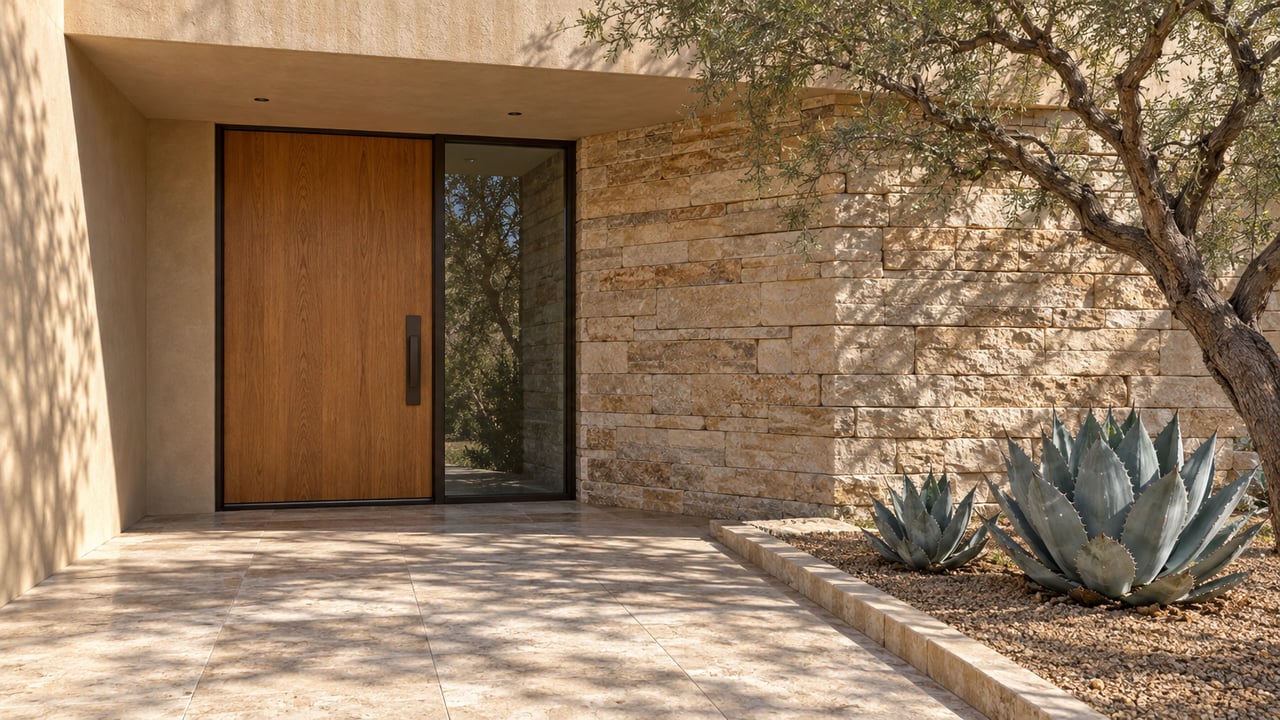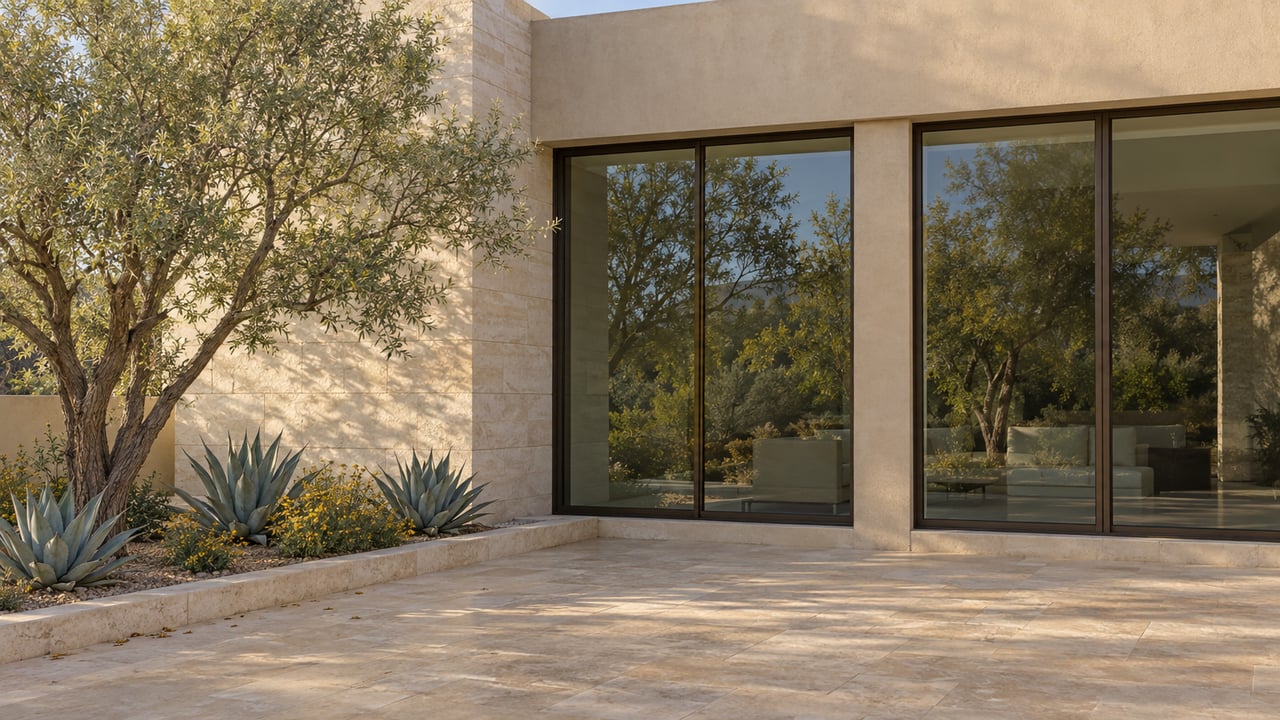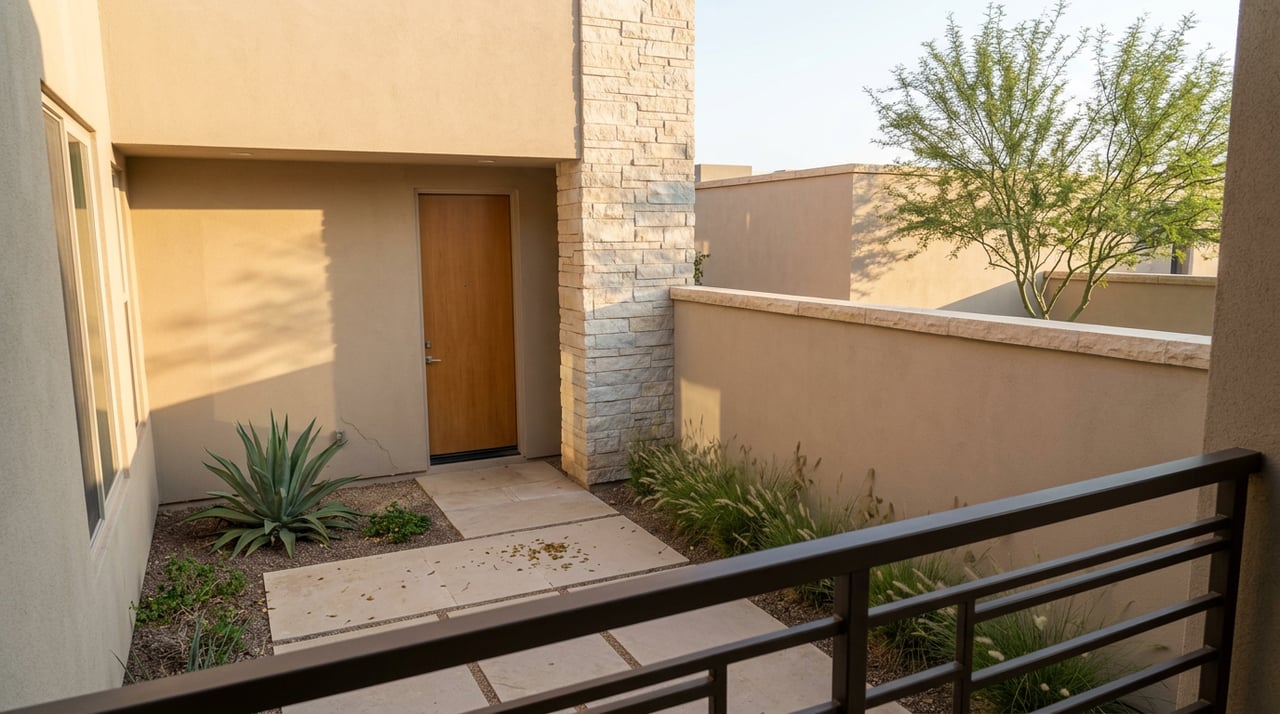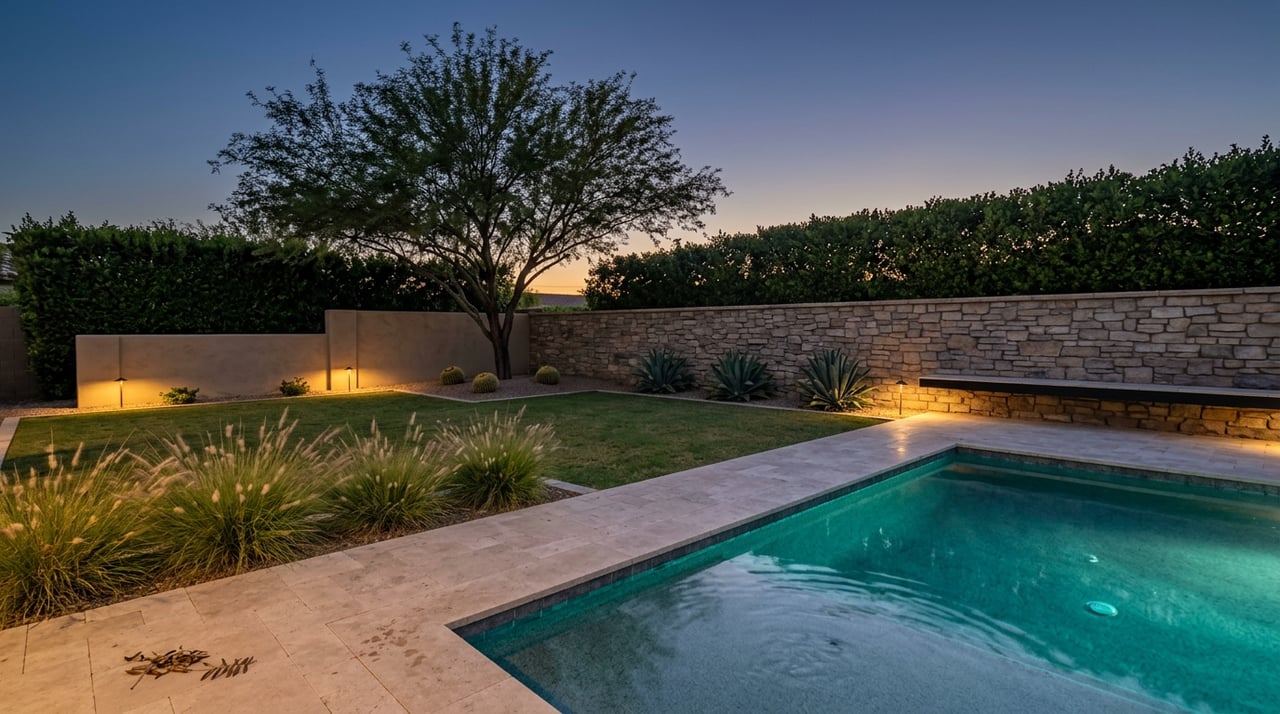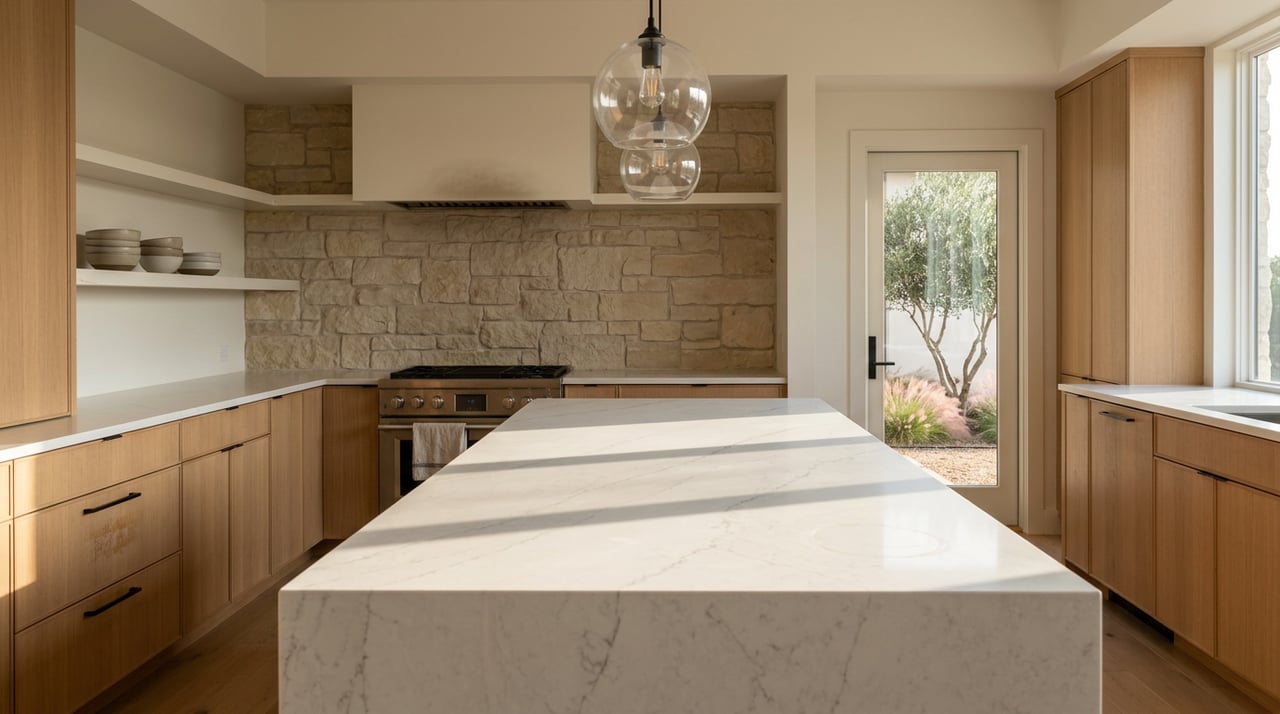
Say you're touring two homes on the same Saturday, one in Cave Creek and one in Carefree, priced within a hundred thousand dollars of each other. The Carefree home feels tighter, more finished, closer to the Sundial and the shops downtown. The Cave Creek home sits on three acres with a barn pad and a view that goes on for miles. Most buyers walk away thinking the price gap is about polish. Carefree costs more per square foot because Carefree is the nicer town.
That's the wrong read. The real line dividing what you pay from what you get isn't the town boundary at all. It's whether the property sits on municipal water and sewer or on a private well and septic system, and that line runs through both towns, not between them.
Why the Per-Square-Foot Gap Is a Distraction
Local brokerage data circulating this year puts Carefree's per-square-foot price roughly $50 to $100 higher than Cave Creek's, and the standard explanation is that Carefree offers a more curated architectural standard, tighter gated communities, and easier proximity to a polished town center. All of that is true as far as it goes. But per-square-foot pricing assumes the square footage you're buying is doing the same job in both places, and it isn't.
In Cave Creek, most residential parcels sit on one to five acres and the zoning code allows horses on the majority of them. A lower price per square foot in Cave Creek isn't a discount on quality. It's partly the market pricing in acreage that Carefree's smaller, denser lots simply don't offer, and partly the market pricing in the utility risk that comes with rural infrastructure. Compare total price and you're comparing two different products wearing the same currency.
What the Numbers Actually Say Right Now
Here's where the two markets stood as of mid-2026, pulled from the most recent reporting available for each town.
| Carefree (June 2026) | Cave Creek (early-to-mid 2026) | |
|---|---|---|
| Median sale price | ~$1.31M | $825K trailing 12-month median; ~$1.1M year-to-date median, depending on the data window |
| Price per square foot | ~$468 | ~$486 |
| Days on market | ~110 | 69 to 111, with well-priced homes moving in 32 to 63 |
| Sale-to-list ratio | Not separately reported | 94% to 98% |
| Market condition | ~78 active listings, roughly 13 sales a month, about 6.5 months of supply, buyer-favorable especially above $3M | Described as luxury-oriented and low-volume |
Notice that the median figures for Cave Creek disagree depending on whether you're looking at a trailing 12-month window or year-to-date closings, and the spread between $825K and $1.1M isn't a data error so much as a symptom. Cave Creek isn't one market. It's a walkable town-center pocket, foothills custom homes, and horse-zoned acreage on the edges, and each moves at its own price and pace. A single median for the whole town tells you less than the median for the specific slice you're actually shopping.
Carefree's number is more stable because the town is smaller and more architecturally uniform, but even there, the 6.5 months of supply and the buyer-favorable framing above the $3M tier matter more than the headline median. If you're shopping estate-tier Carefree right now, you're negotiating from a position most buyers haven't had since 2018.
The Line That Actually Costs You Money
Here's the detail that catches people off guard during inspection, not during the tour.
Carefree's original townsite areas run on city water but septic for sewage. The newer subdivisions and gated communities, including The Boulders, Mirabel, and Whisper Rock, sit on full city utilities. Cave Creek is more binary: well and septic review is described as essential for rural properties outside the Tatum Ranch core, where roughly 3,400 homes sit on more conventional infrastructure.
That means the town you choose doesn't answer the utility question. The specific address does. A buyer comparing a Carefree townsite listing against a Cave Creek foothills listing might assume the Carefree home is the safer bet because it's in the "nicer" town, when in practice both could be on septic, and only one might be on a private well.
The cost of getting this wrong shows up in the closing math, not the listing price. Water well drilling in the Cave Creek area runs roughly $3,750 to $15,300, and digging a well alongside a septic system averages $6,000 to $20,000, which works out to something like $25 to $65 per square foot of added site cost. Site development more broadly, including grading, driveway access, and utility installation for homes being built from scratch, typically runs $40,000 to $80,000 on a standard Arizona homesite and can climb past $100,000 on a remote desert parcel. None of that appears in a comparable sales report. It appears in your inspection contingency and your builder's bid.
The practical move is to stop asking "Cave Creek or Carefree" and start asking a narrower question for any specific property: is this parcel on municipal utilities, and if not, what has already been spent on the well and septic system, and when was it last serviced. That question travels across the town line. The town name doesn't answer it.
Carefree Isn't Static Either
The comparison gets more interesting once you notice that Carefree's own commercial center has been stuck in place for two years, which matters for anyone weighing Carefree's "polished downtown core" against Cave Creek's more rural character as a permanent trade-off rather than a moving target.
The Carefree Quarter, a planned mixed-use retail project at the northeast corner of Carefree Highway and Cave Creek Road, has been through more than one developer since the town council approved it in late 2024. The original plan called for roughly 124,000 square feet across ten buildings, with PetSmart as an anchor and ongoing talks to land Trader Joe's as a second anchor, alongside names like Cold Beer and Cheeseburgers and The Vig floated as tenants. A year after the agreement was signed, there was still no visible construction, just fencing around vacant land. In April 2026, the town announced that the original development team had stepped back and a new developer, SimonCRE, had taken over the site, working with the same property owner and a new leasing group.
Retail sales tax funds roughly 63 percent of Carefree's annual town budget, according to town commentary on the project, which is part of why this single corner matters so much to the town's finances and why it's worth tracking rather than assuming. If you're weighing Carefree's walkable-downtown appeal as a long-term feature, know that the town's second commercial anchor point is still under construction in the most literal sense, not yet a settled amenity.
Who Is Actually Buying Here
The buyer profile for Cave Creek's $1M-plus acreage listings, based on recent local reporting, tends to be relocating from places like Chicago, Seattle, or California, and these buyers typically compare Cave Creek against Carefree, Scottsdale, and Prescott before committing, often taking 60 to 90 days from first search to a written offer. That's a longer runway than most metro buyers, and it isn't a sign of soft demand. It's a sign that these are high-consideration, lifestyle-driven purchases where the buyer is testing acreage, privacy, and Western character against three or four alternative towns before deciding which one actually fits.
If that's your timeline too, use it deliberately. Tour both towns on the same day if you can, and treat the utility question as inspection homework for any specific property, not an assumption you make based on which town it's in.
Before You Write an Offer
A few questions worth asking directly, regardless of which side of the town line the listing sits on:
Is the property on a private well, and if so, has the well log and flow rate been documented recently? Is the septic system original to the home or replaced, and when was it last pumped and inspected? If the property is in Carefree's original townsite, confirm the sewage setup in writing rather than assuming full city utilities because of the town's reputation. If you're buying raw land to build, get a site development estimate before you fall in love with the view, since grading and utility costs on remote parcels can add six figures before the house itself begins.
None of this is a reason to avoid either town. It's a reason to price the actual parcel in front of you rather than the reputation of the zip code it sits in.
Cave Creek and Carefree both reward buyers who do their homework before they fall for the view. If you're weighing acreage against architecture, or trying to read what a specific well-and-septic setup actually means for your closing costs, ROCO Luxury Homes can walk the parcel with you before you write the offer. Book a Private Consultation and let's look at the property, not just the town it's in.